
5 Signs Your Dog Is Bored

Does your dog need more exercise? Learn five signs of boredom, plus simple dog enrichment ideas to keep your Cincinnati dog active, happy, and engaged
Dogs need more than food, water, and a comfortable place to nap. They also need regular opportunities to move their bodies, use their noses, solve problems, play, explore, and spend quality time with the people they love. When those needs are not being met consistently, some dogs find their own ways to stay busy, and pet parents may not always appreciate the results. A shredded pillow, nonstop barking at the window, or a dog who turns every walk into a tug-of-war may be communicating that they need more activity in their day.
So, does my dog need more exercise? Sometimes the answer is yes. But exercise is only part of the picture. Many dogs also benefit from mental challenges, social interaction, training, sniffing opportunities, and a predictable daily routine. At Stay At Home Pet Services, we help busy pet parents provide dependable dog walking and pet care in Cincinnati. Below are five common signs that your dog may be bored and need more exercise and enrichment.

1. Your Dog Seems Restless at Home
Does your dog pace from room to room, stare at you expectantly, wander around the house, or struggle to settle down? Restlessness can be a sign that your dog has energy to burn or is looking for something engaging to do. Of course, a dog does not need to be active every minute of the day. Healthy dogs spend plenty of time resting too. The concern is a pattern of repeated restlessness that does not improve after normal meals, potty breaks, affection, or downtime.
Before assuming your dog needs a long, intense workout, consider whether they need a more interesting routine. A sniff-focused walk, a few minutes of training, a food puzzle, or a game of “find it” around the house can provide meaningful mental exercise. Dogs use their senses constantly, and letting them investigate their environment can be just as satisfying as covering more distance.
Individual exercise needs vary by age, health, breed tendencies, personality, and lifestyle. Most veterinarians emphasize considering both a dog’s exercise needs and appropriate cognitive engagement when managing unwanted behavior.
2. Your Dog Barks More Than Usual
Dogs bark for many reasons. They may bark at delivery drivers, wildlife, visitors, unfamiliar sounds, other dogs, or excitement at the front door. Barking is normal communication, so the goal is not to expect silence from every dog. However, frequent barking (especially when your dog appears bored, frustrated, or restless) can be a clue that they need more structured activity. A dog who spends the day watching the front window may bark simply because every sound and movement becomes the most exciting thing happening.
If your dog’s barking increases when they are home alone, try adding a better outlet before you leave. A morning walk, training session, puzzle feeder, or safe enrichment activity may help them start the day in a calmer state. Regular dog enrichment can also include a midday dog-walking visit that breaks up a long stretch at home.
Excessive barking, whining, or howling can be linked to boredom, but it can also occur with separation-related distress, fear, reactivity, or other behavior concerns. If the barking is new, extreme, or accompanied by signs of panic, talk with your veterinarian or a qualified behavior professional rather than assuming boredom is the only cause.

3. Your Dog Is Chewing, Shredding, or Getting Into Things
Chewing is a natural dog behavior. Puppies chew while teething, adult dogs may chew because it feels good, and many dogs enjoy having an appropriate chew as part of their routine. The issue is when your dog regularly chooses shoes, furniture, remote controls, rugs, trash, or other unsafe household items. Destructive chewing can happen when a dog is bored and looking for an outlet, but it can also be related to anxiety, teething, confinement stress, or a lack of safe, appropriate chew options.
Instead of punishing your dog after you discover a mess, focus on prevention:
- Put tempting items out of reach.
- Offer safe toys and chews that are appropriate for your dog.
- Rotate toys so they remain interesting.
- Add physical exercise and brain games to the daily schedule.
- Use food puzzles or slow feeders to make meals more engaging.
- Avoid leaving your dog unsupervised with any item they could destroy or swallow.
The ASPCA notes that dogs may chew to combat boredom and recommends both physical exercise and mental stimulation to help prevent destructive chewing. If your dog has swallowed fabric, plastic, stuffing, bones, or another non-food item, contact your veterinarian promptly. Destructive behavior can be frustrating, but safety comes first.

4. Every Walk Feels Like a Pulling Contest
A dog that pulls on the leash is not automatically bored or under-exercised. Pulling can be affected by training history, excitement, fear, reactivity, the equipment being used, and how rewarding the environment feels to the dog. Still, a dog who spends most of the day indoors may be especially eager to get outside. The moment the leash clips on, they may explode out the door because the walk is their only chance to see, smell, and experience the world.
Rather than viewing walks only as a way to tire your dog out, think of them as an opportunity for enrichment. A slower walk with time to sniff can be valuable. Change the route occasionally when it is safe to do so. Practice simple cues such as “watch me,” “let’s go,” or a brief sit before crossing the street. Reward calm leash behavior with praise, treats, or the chance to continue sniffing.
Consistent leash training takes time, and dogs should not be yanked, choked, or punished for pulling. If your dog’s pulling is intense, creates safety concerns, or involves lunging at people or other animals, seek help from a qualified, force-free trainer. Unruly behavior can include leash pulling, continual barking for attention, and difficulty responding to cues, but the right plan depends on the individual dog and the reason behind the behavior.
For many busy households, regular walks with a professional dog walker can provide an additional outlet during the day while supporting a more consistent routine.
5. Your Dog Constantly Demands Attention
Does your dog repeatedly paw at you, bring you toys, nudge your arm, jump up, bark for interaction, or follow you from room to room? Those behaviors can be your dog’s way of saying, “I need something to do.” Attention-seeking does not mean your dog is being difficult. They may be bored, under-stimulated, excited, anxious, or simply used to receiving attention whenever they ask for it. The key is to give your dog appropriate attention and activity before they become frustrated.
Try building short, predictable engagement sessions into the day. Even five to ten minutes can be useful when it is purposeful and consistent. You might try:
- A short game of fetch or tug
- Basic obedience practice
- Teaching a new trick
- A treat scavenger hunt
- A snuffle mat or puzzle toy
- A sniff walk around the neighborhood
- A calm play session before dinner
Then, reward your dog when they choose to settle quietly on their bed or relax nearby. This helps them learn that calm behavior is rewarding too. Many boredom-related behaviors improve when dogs receive a combination of physical exercise, social interaction, mental stimulation, and daily structure. Common signs can include attention-seeking, pacing, chewing, stealing objects, and shredding items when a dog lacks enough structured engagement.
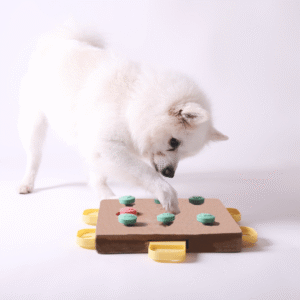
What Counts as Enrichment for Dogs?
Enrichment is anything that gives your dog a safe, appropriate way to use their brain, body, and natural instincts. It does not need to be expensive, complicated, or time-consuming.
Helpful enrichment ideas include:
- Sniffing: Let your dog sniff during walks instead of rushing every outing.
- Food-based activities: Use puzzle feeders, frozen food toys, or scatter feeding when appropriate.
- Training: Practice cues your dog already knows or teach a simple new skill.
- Scent games: Hide treats or a favorite toy and encourage your dog to find it.
- Toy rotation: Put some toys away and rotate them every few days.
- Play: Use games your dog genuinely enjoys, such as fetch, tug, or hide-and-seek.
- Safe social time: Arrange positive interaction with familiar people or compatible dogs when appropriate.
- Routine: Maintain regular walks, meals, potty breaks, and rest periods.
A better routine does not always mean doing more all day long. It means choosing activities that fit your dog’s individual needs and giving them a healthy balance of activity, engagement, and rest.
When to Call Your Veterinarian
Boredom can contribute to unwanted behavior, but it is important not to overlook medical or emotional causes. A sudden change in behavior should not automatically be labeled as a lack of exercise. Talk with your veterinarian if your dog suddenly becomes destructive, restless, unusually vocal, withdrawn, aggressive, fearful, less interested in food, changes their bathroom habits, seems painful, or has trouble sleeping.
Sudden behavior changes may be related to illness, discomfort, anxiety, aging, or another issue that needs professional attention. Your veterinarian can help rule out health concerns and recommend the right next steps for your individual dog. If training or behavior support is needed, they may also be able to refer you to a qualified professional.

Give Your Dog Something to Look Forward To
A happier routine often starts with small changes: a little more time to sniff, a new puzzle at breakfast, a few minutes of training, or an extra walk during the day. When dogs have appropriate outlets for their energy and curiosity, many unwanted behaviors become easier to manage.
If your dog is home while you are at work, school, or away from the house, Stay At Home Pet Services can help. Our Cincinnati dog walking and pet sitting services provide dependable care, exercise, companionship, and enrichment tailored to your pet’s routine. Whether your dog needs a midday potty break, a neighborhood walk, or extra attention while you are away, we are here to help them stay active, engaged, and cared for.
Contact Stay At Home Pet Services Today!
Here at Stay At Home Pet Services, we offer quality pet sitting services at competitive prices. We have over 10 years of experience, our sitters are certified in pet first aid & CPR, and we love all pets as if they were our own.
We are located in Cincinnati, OH and service the following areas of East Walnut Hills, Hyde Park, Mt Lookout, Oakley, Norwood, Kennedy Heights, Pleasant Ridge, Tusculum, East End, Mariemont, Fairfax, Madisonville, Mt Washington, Dillonvale, Deer Park, Silverton, Kenwood, Madeira, Indian Hill, and Anderson Township.
Click here to become a client today or give us a call at 513-706-7702. Be sure to check us out on Facebook and Instagram too! We post everyday, so make sure you follow us so you don’t miss out on any adorable pet pictures.