
Back-To-School Tips For Dogs

Help your dog adjust to the back-to-school routine with practical tips for easing stress, building consistency, and keeping dogs happy while home alone
When summer ends and school starts again, the whole household’s schedule can change overnight. Early alarms, backpacks by the door, bus stops, after-school activities, and longer stretches of quiet at home can be a big adjustment for dogs. This is especially true for pets who have spent the whole summer with their favorite people nearby.
At Stay At Home Pet Services, we know that dogs thrive on routine. Therefore, a sudden shift in their day can lead to boredom, extra energy, or signs of stress when the family heads out the door. The good news is that a little preparation, consistency, and support can help your dog settle into the new school-year routine.

Why Back-to-School Changes Can Be Hard on Dogs
Dogs don’t understand school calendars, but they definitely notice changes in their people’s behavior. During summer, your dog may be used to later mornings, more family time, frequent backyard breaks, extra walks, and kids being home throughout the day. Then, suddenly, the house is empty.
An abrupt change in how long a dog is alone can contribute to separation-related stress. Keeping daily meals, walks, and playtimes predictable (and practicing short periods of alone time before the new routine begins) can make the transition feel less overwhelming.
Every dog is different. Some will nap happily until someone gets home. Others may become restless, bark more than usual, chew household items, pace, or seem overly excited when family members return. Those behaviors do not always mean a dog has separation anxiety, but they can be a sign that your dog needs more support, exercise, enrichment, or a gradual adjustment period.
Start the New Routine Early
The best way to help your dog adjust is to avoid making the first day of school the first day of a completely different schedule. A week or two before school begins, start shifting toward the routine your family will follow in the fall:
- Wake up closer to the time you will need to wake up on school days.
- Feed breakfast at a consistent time.
- Schedule a morning walk, backyard break, or play session before everyone leaves.
- Practice calmly leaving your dog alone for short periods.
- Gradually increase alone time when your dog remains relaxed.
- Keep afternoon and evening routines as predictable as possible.
Practicing departures can be especially helpful for dogs that have become used to constant company. Most dog behaviorists recommend beginning with brief absences and building up gradually, rather than expecting a dog to immediately handle a full school or work day alone.
Try to keep departures low-key. A long, emotional goodbye can unintentionally signal to your dog that something stressful is happening. Instead, calmly gather your things, offer a simple goodbye, and leave without creating a lot of extra excitement.

Give Your Dog a Morning Outlet
A tired dog is not necessarily a perfectly calm dog. However, physical activity and mental engagement can make a meaningful difference before a long stretch at home. Before the school-day rush begins, give your dog time to move, sniff, and engage with you. Depending on your dog’s age, health, and energy level, that could include:
- A neighborhood walk with plenty of sniffing time
- Fetch or tug in the yard
- A short training session using positive reinforcement
- A food puzzle at breakfast
- A game of “find it” with treats or kibble hidden around a room
- A few minutes of play before the family leaves
A morning walk or active play session can help dogs release energy before the household empties out. Interactive toys, chews, and food puzzles can also give dogs something positive and engaging to do after their people leave.
For many busy Cincinnati families, mornings are already packed. That is where a scheduled midday dog walk can help break up a long day for dogs who need a bathroom break, exercise, companionship, or a little extra stimulation.

Make Alone Time More Rewarding
Your dog should not only associate school mornings with everyone leaving. Whenever possible, build positive experiences into the time right before departure. A special stuffed food toy, a veterinarian-approved chew, a puzzle feeder, or a sniffing activity can give your dog something enjoyable to focus on while the house gets quiet. Rotating toys can also help keep them interesting instead of leaving the same items out every day.
Keep safety in mind: only leave your dog with toys or chews that you already know they can use safely without supervision. If your dog is prone to swallowing pieces of toys, tearing apart chews, or guarding food items, choose a safer activity or speak with your veterinarian or qualified trainer for individualized guidance.
Some dogs also settle better with gentle background sound, such as calm music, the radio, or television. This will not solve anxiety on its own, but it may soften outside noises and make the home feel less empty for some pets.
Watch for Signs of Stress
A back-to-school adjustment period is normal, but pet parents should watch for changes that suggest their dog is struggling.
Possible signs include:
- Barking, whining, or howling after you leave
- Pacing, panting, or drooling when alone
- Destructive chewing or scratching at doors and windows
- Accidents in the home despite being reliably house-trained
- Refusing food when left alone
- Attempting to escape a crate, room, or home
- Extreme excitement, jumping, or frantic behavior when people return
A pet camera can be useful for seeing what happens after you leave. Some dogs settle quickly and sleep most of the day, while others may show stress that is not obvious when you get home. Do not punish your dog for behavior that happened while you were away. If a dog is anxious, punishment can increase fear and damage trust. Instead, focus on reducing the difficulty of the situation, building independence gradually, and getting professional support when needed.
If your dog is injuring themselves, attempting to escape, panicking, or showing severe distress, contact your veterinarian promptly. Your vet can help rule out medical concerns and may recommend a qualified trainer or veterinary behavior professional.

Consider a Midday Dog Walk
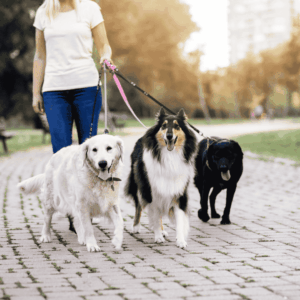
For dogs that are home during the school and work day, a professional dog walker can provide an important break in the routine.
A midday visit can give your dog the chance to:
- Go outside for a potty break
- Stretch their legs and get fresh air
- Enjoy one-on-one attention
- Get mental stimulation through walking and sniffing
- Reset before the afternoon
- Avoid being alone for one long, uninterrupted stretch
If you’re unsure whether your dog can comfortably go all day without an outdoor break, arranging for a pet sitter to visit around lunchtime is the most practical option. At Stay At Home Pet Services, we understand that each dog’s needs are different. A young, energetic dog may benefit from a longer walk and playtime, while a senior dog may prefer a slower stroll, a potty break, fresh water, and some calm companionship. Consistent visits can be especially helpful during the first few weeks of a new school-year schedule.
Help Your Dog Feel Secure
Back-to-school season can be busy, but small routines go a long way. Keep meals, walks, affection, and bedtime as consistent as you reasonably can. Give your dog attention when you are home, but also allow them to practice relaxing independently in their own bed or safe space. Most importantly, be patient. Your dog may need time to understand that even though the house is quieter during the day, their family always comes back.
If your dog needs a little extra support during the school day, Stay At Home Pet Services is here to help with dependable dog walking and pet sitting in Cincinnati, Ohio. A midday visit can give your dog something to look forward to and give you peace of mind while your family settles into its new routine.
Need Extra Support for Your Pet?
A predictable routine, regular exercise, and mental enrichment can make a meaningful difference in your pet’s day, especially when your schedule gets busy. If you are away at work, managing school schedules, or planning time out of town, Stay At Home Pet Services can help your pet get the attention and care they need.
Stay At Home Pet Services proudly serves pet parents in East Walnut Hills, Hyde Park, Mt. Lookout, Oakley, Norwood, Kennedy Heights, Pleasant Ridge, Tusculum, East End, Mariemont, Fairfax, Madisonville, Mt. Washington, Dillonvale, Deer Park, Silverton, Kenwood, Madeira, Indian Hill, and Anderson Township.
Ready to give your pet a little extra attention during the day? Click here to become a client today, call us at 513-706-7702, or follow Stay At Home Pet Services on Facebook and Instagram for daily pet photos, helpful tips, and updates from our team.